I recently learned something I already knew. I say this with certainty, as I seem to learn and re-learn things in a perennial fashion (like the cycle of clouds, rain, river, ocean). However, what I most recently learned that rings loudest above the sound of water in my ears is a phrase that gives name to an experience. It is an experience most women know, most women have had, at one time or another in their lives. Or maybe she experiences it on a daily basis. Or maybe she’s overcome it by naming it and moving on. Or maybe it has forced her into a new world; a different realm where the gender population is more diverse and the overwhelming number of men in her old world is now a distant, fuzzy, testosterone saturated dream she’ll never re-visit. Or maybe she continues to persevere in a male dominated workforce. She is a woman soaring with her spirit, her dreams, her hopes, entering the world of leadership and power. The world of top ranks in difficult positions—physically arduous, mentally arduous, or both. A woman wanting the greatest satisfaction of all in life—to step up to a challenge and make a difference. A woman raising her voice and speaking out on behalf of herself. Her gender. Her family. Her people. Her country. Her world. Only to have the population of men and other women in her field criticize her voice for being too high pitched. Too whiny. Too feminine. She is deemed too sweet and incapable of leadership. Or she booms out her point of view in a stern voice and takes heat from nobody. She is assertive and requires attention, as well as order all around her. So she is deemed the bitch. Contemporary women have ambition, but most experience rigid stereotypes from their male, as well as female peers, when they attempt to advance their careers in a male dominated field. Most women experience the double bind.
The common knowledge definition of a double bind is a situation in which a person is confronted with two irreconcilable demands or a choice between two undesirable courses of action. It is a situation that makes people feel trapped, without recourse, and ultimately, crazy in a catch twenty-two scenario. It is a situation that current psychology has deemed a known cause of schizophrenia. It is a situation that causes hopelessness and depression, and eventually reaction. The reaction may be one of two extremes—killing off one’s emotional capacity in order to attain a goal, or giving up the goal based on toxicity and damaging effects to one’s personal happiness and health. These effects are all based on bullying and other people’s discomfort. This concept, the double bind, is a known phenomenon that places one in a state of crisis. And all women entering the world of leadership or any male dominated field will experience it.
Although the double bind is a very real occurrence for women entering political leadership roles, over four hundred women are listed on the ballot for the U.S. House of Representatives for 2018, which lends hope, in spite of the death grip the double bind seems to have on society and its stereotypes of gender roles. This unprecedented number of women entering political leadership is optimistic. With hundreds of women leading the way as role models for others, this may be the time for both men and women to rise to the occasion. To become so hyper conscious of toxic, alienating, stereotypical thoughts concerning gender roles that it forces a change. In a nation where sexually harassed, abused, and assaulted women are finally being heard instead of silenced or laughed off due to the discomfort or inconvenience of accusations, the climate seems primed for change. And the rest of us non-political candidates cannot rest on our laurels and allow it to pass. But how will this change occur?
As with every great triumph and transformation on this planet, it will occur with adaptation demanded by the constant process of evolution. These are terms that are often associated with physical and biological sciences; however, they are just as appropriate for social dynamics in human animals, as well. As our social world acknowledges issues and problems, social awareness begins to evolve, in spite of no actual change in gender stereotypes taking place. As the challenge becomes greater, the pressure also becomes greater, and the push and pull—the greater struggle—moves closer to the edge. Like the simple but miraculous replication process of cellular mitosis: the cleavage forming (pun intended), then transforming into two separate cells; the miracle of meiosis and the joining of two gametes to produce a zygote, then on to an embryo; the process of a human baby taking her first steps; teenagers learning to drive; tadpoles growing lungs, becoming amphibious frogs; birds flapping their wings, taking their first flight; animals utilizing tools to attain and store food; migration patterns for optimal food and shelter; and even the Declaration of Independence created to ensure protection of the people against tyranny and deliverance from the chaos of a lawless land. The state of humans evolves, requiring greater adaptation for species survival and success, the same way that the physical and biological world around us accomplishes this.
Adaptation and envisioning new gender roles is something we can learn from nature. This learning process already has a name: Biomimicry. Biomimicry is the imitation of the models, systems, and elements of nature for the purpose of solving complex human problems. It is the observation and then utilization of the successful tactics of other species around us that intuit the evolving world and, therefore, adapt for survival. Adaptation is a common occurrence in most animal and plant species. For instance, plants in the desert have structurally adapted to the severe hot and dry climate. Succulents store water in their stems and leaves. Cactus have developed sharp spines to keep thirsty predators away, and the creosote bush produces toxins that prevent other plants from growing nearby, thus reducing competition for nutrients and water.
Social adaptation can also be observed and learned from nature. The famous social scientist Jean Piaget described the way in which humans adapt over a life span to their environment in order to meet situational demands. Adaptation requires equilibrium, assimilation and accommodation. And for too long, the emphasis has been placed upon the assimilation factor. Humans are capable of great change. But when it comes to human social adaptation and overcoming preconceived notions and ingrained social hierarchies, we are much slower than plants to change.
So why is the human species so slow to socially adapt? Why has it taken thousands of years for women to be considered even relatively equal to men? Human social dynamics are complicated, as we are seldom willing to change and lose stasis. We shy away from the opposing state of flux required and cling to our psychological comfort zones. We grasp at what we know to maintain stability. However, we are creatures with a conscience. We do possess theory of mind. We are capable of empathy. We can socially evolve through our own restructuring of thought processes and consciousness. What we consciously choose to think. What we choose to surround ourselves with and support. We can focus on the change required for our species to adapt, and we can educate ourselves and our communities. Although the process of adaptation—even for the great human mind—can be slow, there is no need for it to take another thousand years to accept women in positions of power and traditionally male roles without damning them to a life of catch twenty-twos, double binds, and endless alienation.
Consider highly intelligent animal species that have socially adapted and are led by alpha females. The Spotted Hyena has the most powerful bite of all mammals and is also a dramatic example of female dominance in a species. Both physical and social structure-based adaptations place female Spotted Hyenas as high-ranking in their clans. Large social groups are run by dominant females in a society slanted so strongly in favor of the females that an adult male newcomer ranks below all cubs. The eagle, falcon, or hawk (birds of prey) also have alpha females that are large and powerful. They are the best hunters and require the most food to make intelligent decisions for their cast, as well as to nourish offspring. Similarly, the world’s most powerful and lethal dolphin species, the Killer Whale or Orca, also has an intricate dominant female leadership presence. Orca pods are led by matriarchs who apply cunning wisdom and survival tactics that define their species. Female Orcas also stop bearing young around 40 years of age but can live 90 years. Strikingly similar to humans, I’d say.
But what we really want for our human species is gender equality. And most inline with this concept are species equally led by both male and female alphas. There are two species that stand out for their equal and advanced social hierarchy: the mongoose and the wolf. The mongoose is admired for her ability to bring down snakes, in particular King Cobras, that could kill a human in seconds. They are highly social creatures that lives in colonies with several dozen members. These groups are usually lead by an alpha male and female who are often the only two who mates that reproduce. The mongoose world is a supportive society where each member of the pack has a specific job and ensuing duties. Some are hunters, while some stay behind and care for the young. In this system, old or weak members and babies are nurtured by the entire pack, with food being brought back to the den and freely shared.
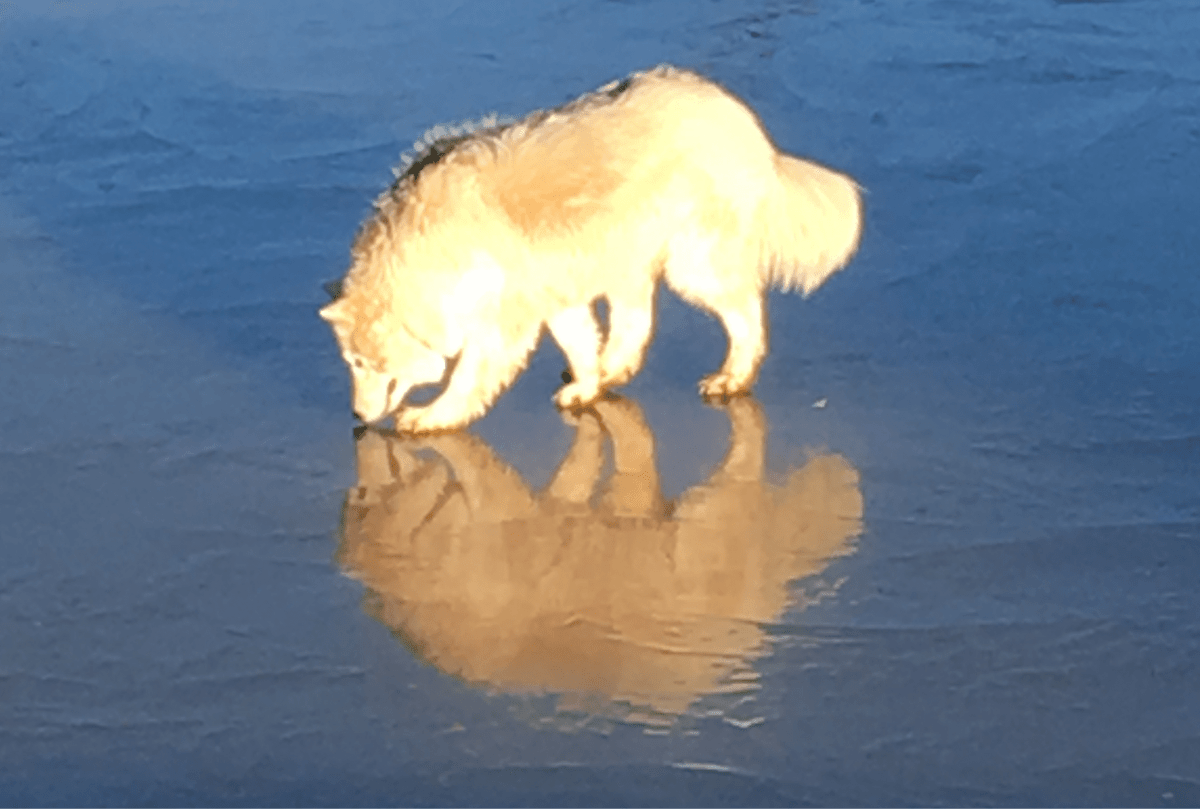
Perhaps the species that is the most like us, and that we are in the most hurry to eradicate around the world, is the wolf. The social dynamic and adaptation of the wolf pack is equally led by both alpha male and alpha female. Whether you are a hunter or a rancher, a naturalist or a biologist, there is no denying that wolves are a species that have learned to survive and flourish. If humans did not exist, wolves might be the dominant land species of the planet. They are highly intelligent, they have equal leadership representation from male and female genders, and they have a hierarchical feeding arrangement that ensures all members of the pack are nourished, as all members are integral for survival. The entire pack hunts and stands guard over the wolf pups, in order to ensure future progeny of the pack. They have an advanced adaptive system which allows them to live in many habitats, and therefore, we see them as in direct competition with the human species. For social adaptation, inclusion of the group, and for species survival, we can learn much from the gender-equal leadership of the wolf.
Humans are evolving on a daily basis. Socially, physically, spiritually, mentally, and emotionally. We learn and attempt to change for it. Confronting difficult challenges can seem like an obstacle to progress and personal adaptation, but through perseverance, the adaptation process speeds up sequentially. This is another form of “rehabbing rain,” in its variable splendor and grand canopy of contemporary applicable instances. There are many lessons to be learned in the rehabilitation of humans, as well as animals and nature. It is a slow process. It is an imperfect process. It is dynamic and beautiful, heartbreaking and wondrous. But with each break through, the spirit soars, and the individual adapts. These discrete triumphs will lead to the adaptation of the entire species, slowly but surely, on a global scale. Commit to rehabilitating one being. One entity. Commit to yourself. Commit to an animal. Commit to the forest. Commit to re-wilding. Whatever you choose, this is how humans will grow as a species, through your choice and commitment. This is how we change, one unique person at a time, and finally do away with stereotypes, gender roles, double binds, and rigid structures that keep humanity perpetually in the past, wondering why we cannot manage equality as such an advanced species.
It is past time for the rehabilitation of the way the world sees women and what is expected from us. It is time for the healing of the male spirit within women, and the healing of the female spirit within men. It is time for an androgynous embrace. It is time to let our best qualities rise to the surface, and allow gender concerns to be a thing of the past. It is time to listen without looking. To see without expecting. To open wide and balance. It is time to mimic nature and let alpha women of the pack make the important decisions that an imperfect, distorted, unbalanced, and greedy country within an avaricious world is incapable of making without her leadership present. But herein lies the challenge. And this may be our greatest challenge in social adaption yet.
This year there will be change, if we let there be. No longer can one in three women experience physical or sexual violence while the world stands aside and does nothing. Blames women. No longer is it okay for silence to equal yes. No longer is it okay for silence about sex to be okay at all. No longer is it okay for women to feel bad about themselves for “letting it happen.” No longer will women be victims. Women will stand up for themselves, their friends, their families, their country, their people, their homes, the earth, the planets and stars. Women will stand in leadership roles, shoulder to shoulder with men in difficult jobs, and their peers will cheer them on. The world will rehabilitate, one great challenge and adaptation at a time. If we focus on this. On these words. On the reality that nature accomplishes with ease, the world will change. And women will be released from the double bind that has trapped our greatest potential for too long.

 Rehabbing Rain
Brianna, This is so brilliant! I am in awe of your wisdom and understanding. And again, your deep understanding of the other living beings on this planet and how we all ought to fit together is so rich and wise and godly. Please keep writing and helping us to see how humans and others live together.
LikeLiked by 1 person
Thank you, Connie. Thank you SO much for your support! It means everything. 🙂 xo
LikeLike
Brianna,
You are an amazing mind. Thank you for articulating the truths of our time as human beings evolving, along with animal parallels.
LikeLiked by 1 person