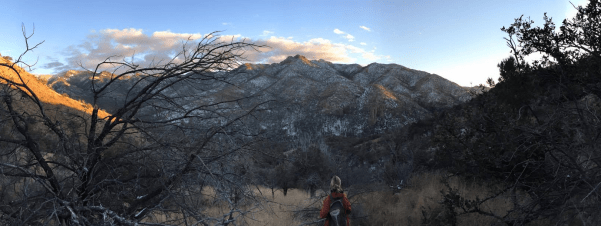
Featured

One

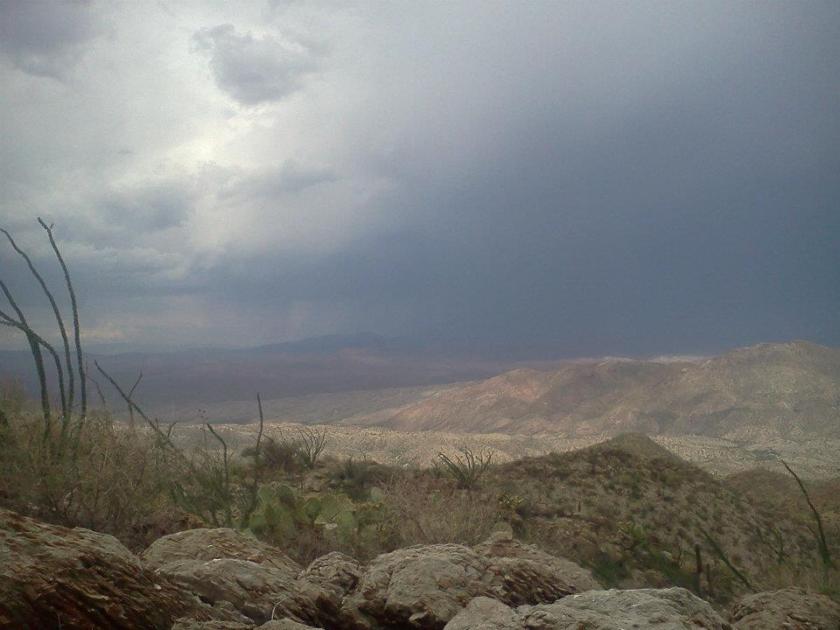
I was born and raised in the desert. Like most desert plants and animals, I love rain. I live for rain. I live because of rain. Rain heals me, as it heals and seals the cracked floors of sunbaked arroyos and limestone canyon walls. It peels back the membranes of seedpods, freeing them to the warm winds and porous soils to replant and grow—shallow rooted and thin bodied. Rain plumps up cactus flesh, sending a moist exhale of rescue breaths down the throats of desiccated, sweat-caked desert dwellers whose minds petrify as they stare intently into the flames of mesquite barbecues. This collective gasp sweeps across the land. This forced air is said to be the origin of the infamous haboob, the monumental respiration of all living things in the desert when the rain clouds roll in and the infernal sun is finally blotted out. You probably didn’t know this, did you? The power of breath in the desert. In close proximity to sand and the earth’s core, breath is powerful. The air is heavy. Rain rehabilitates the desert world.

As a girl growing up addicted to biannual rain seasons in Tucson, Arizona—summer monsoons and winter maintenance rains—I loved rain so much, I decided to name my first-born human child Rain. Someday. When I had one. Then someday became today and I didn’t have a human child, but instead, an immense love for wild things. For displaced wild animals. For the canines that walk the line between domestic and wild, not knowing their sure place, and for many reasons I will get to later, I can relate to these animals. The world made us as we are—compatible and cohesive—to gravitate together in a realm of dire solidarity, to pack up and survive. To thrive. And so I began to rescue wolf dogs in danger of euthanasia from the animal shelter. My first feral female I, of course,  named Rain.

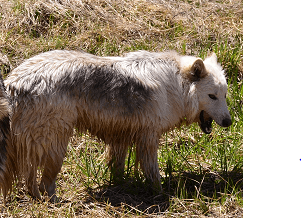
Rain arrived. There was nothing seasonal about her, accept that she arrived with the monsoons, and she was weathered. Withered. Scrawny, her fur matted and full of parasites. In spite of this, she was beautiful. A spirit animal from another dimension. A small, white, yellow-eyed, large-toothed wolf. When I took her home from the shelter and bathed her, she howled, she gnawed, she clawed me. She was so malnourished, most of her sinewy fur fell out. She had the beginning stages of an Upper Respiratory Infection (Kennel Cough), I could tell from the sniffles and runny nose. She fought me, just enough to show will, but she was tired. I lathered her up and scrubbed her down, as she finally submitted, stiff as a board. Fight or flight had passed, Rain was in shock and submission. The pre-stages of learning to trust and simply breathe in the desert.

When I finished, she stared blankly at the drain—immobile, hairless, eyes on fire, skinny legs and all. I wrapped a towel around her and lifted her from the elevated tub, her legs sticking straight out, all 35 pounds of her emaciated frame. Her hip and shoulder bones pierced my hands, leaving a lasting impression. I dried her gently with the towel, then set to clipping matted fur from her with scissors and feeding her tiny pieces of dried fish. This, I would soon find, was her element. Soaked to the bone and devouring protein. It would take months before Rain would gaze upon me with her full moon eyes, but she was already beginning to feel me. To lean into me and fight less. And it wasn’t long after that, Rain was running, racing me into the revelation of ethology and the genius of all things wild.

We hit the roads. Rain darted every which way like a minnow, petrified of my footfalls. Each forward step I took, she took two to the side. I finally let her off leash and she began to follow. We also had Shooter, my male Mexican wolf mix and confident alpha in any pack, leading the way for us. Shooter found me in the back country wilderness of the Tonto National Forest, as a young pup. But that story is also for another chapter. It was Rain—as Rain needed the rehabbing—that growled and lunged at Shooter, conditioned from her first year of life as a stray in the streets of South Tucson, to fight off all competition for resources. And I was her number one resource now. But Shooter saw her as damaged and not worthy of his time, snorting into the air with disapproval. So I ran between them. We took to the washes—in between floods—dodging Diamond Backs and chasing rabbits. And the monsoon rains fell. Every afternoon into the evening, like clockwork. It was an El Niño year, and the satiating season for rehabbing Rain had begun.

The Wind, Haiku, & Grandfather

“Let the beauty of what we love be what we do. There are hundreds of ways to kneel and kiss the ground.” –Rumi

Wind, in many ways, is like water. They’re both made of similar elements—gases of various valence—rearranged atoms to make new molecules. Wind is air. Air is mostly oxygen and nitrogen. Air heated or cooled by the earth’s surface makes wind. Water is mostly oxygen and hydrogen.  Water heated or cooled propels air into wind and a perpetual embrace not unlike the yin and yang symbol of male and female; cold and hot; dark and light begins. Wind and water are sculptors of time, each utilizing its unique artistic abilities. Without hydrogen, wind must sculpt without moisture. Wind sculpts with pressure—speed and direction. Wind possesses the fluidity of water, flowing in channels and streams, with similar effect, for their purpose as creators in nature are in concordance. Their roles are based upon influence and change, a training of the land and its creatures that in turn change shape and form based upon this eternal embrace of wind and water.

Rehabilitation is a type of training. A reconditioning. A healing relief—like water falling from the sky upon the hot summer’s ground. Like wind through the stifling treetops. A sculpting—like wind and water applied to sandstone over thousands of years, creating canyons and valleys, cliffs and crevasses, gullies and lakes. And we wonder why the training and reshaping of the human condition is difficult to accomplish in a single lifetime. So much work—speed, volition, and direction. For mere flesh and blood, hardly stone. Boulders urged into precarious positions, awaiting further persuasion. Further erosion. We are like rock and stone and we must be shaped by wind and water; sun and moon; earth and sky; heaven and hell.Canyon in G CanyonIt is the wind that I want to write about, and how it rehabilitates jagged edges, rugged stone, and makes it round and soft after a violent event—like an avalanche or a thunderstorm. The wind, that is always touching us, saying hello, face to face. Mouth to mouth. The wind that wipes our memories clean, heals us with endless possibility and whispers of what’s to come. What will always be. I think of other important “w” words that thematically apply—besides the meta example of the word “word” itself. Words like wolf, water, wilderness, wondrous, woods, walking, wayfaring, wander, worship, whimsy, wisteria, wit, winter, web, witches, wave, weather, west, weave, womb. To name a few in the most alliterate fashion. I like words that begin with “w.” “W” makes a sound that wraps you in its two arms—like feathered wings—and whispers soothing sounds. Reassuring terms and conditions. “W” is where we are at in this world, without anyone else, as one, and “w” makes our lips pucker when we pronounce it, “Wuh,”—as if we were reaching up to kiss the air, the sky, the wind. Wind and wolves and words. I wander.

And what causes wrinkles? Surely wind contributes, like ripples across a placid lake. And the lack of moisture. And how we age like sandstone canyons. I’ve watched Arizona canyons change with wind, water, and time—the way I watched my grandparents’ faces become etched with age, tiny wrinkles in perfection. Forged with time. With love and loss. With endurance. My grandfather was a writer and he loved the desert southwest. He managed numbers, mostly, but he loved words as well. He loved puzzles. Word puzzles. After he retired from forty years of accounting, he turned to the dozens of binders—tall shelves-full, reaching floor to ceiling in his office—to recollect notes taken on family history, etiology, naturalist notes on the desert southwest, and notes taken on his own life story. He would reshape and write a grand book with all of these notes and call it The Richard and Violet Heisey Family, by Richard Heisey, and in between firefighting seasons, I would help him edit it.

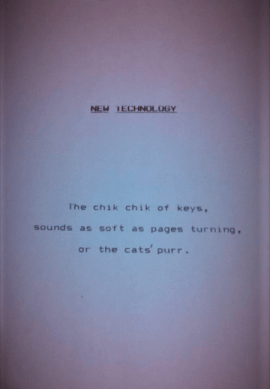
One of Grampa’s favorite forms of word puzzle was the haiku. He explained the haiku to me, once, in one of his long letters he used to write on his typewriter and mail to me—wherever I was tumbling in the wide, windy world. I knew the haiku from my studies, but not well. Grampa explained it as a simple, witty collection of words that applied to nature and revealed an unexpected result in its finale. A twist. Then he included his own unique haiku to lead by example:


Grampa's Haiku EDITED 2

New Technology

The chik chik of keys,

Sounds as soft as pages turning,

Or the cats’ purr.

I loved his haiku and I kept it safe—hand-typed on a piece of notebook paper—and found this poem, its metaphor and association of nature with words, animals with innovation, sound with substance, to be an enduring source of inspiration.

Before my Grandfather passed away, a few years after he gave me his haiku, I was fighting fires in southern Arizona and visiting him every week for dinner and song night at his retirement community. My grandmother had passed of Alzheimer’s five years prior (the death that prompted Grampa to write his autobiography and family history, as well as become a student mentor at a local Elementary school) so Grampa truly enjoyed our visits. One night he asked me what I planned to do next, when I was tired of bossing around boys and playing in trees. He could tell my mind was restless and my body tired from digging endless fire line.

“I don’t know,” was all I could say, shrugging my shoulders.

Full moon in desertThat night I went on a long walk in the desert, like I used to do with Grampa when I was a little girl. The stillness in the air—quiet Mesquite and Palo Verde branches—began to bristle. The middle-aged moon slipped in and out of clouds and stars winked through thick bushels of Arizona sky cotton. I thought about my many years in the wild, fighting fires and sleeping on the ground. With the earth. The sense of purpose it gave me, and the need for urgency. I worked with people, on a crew, but we worked for the wild—the trees, the soil, the fire—for animal habitat and rehabilitation of the land, but we worked long and hard hours with our bodies. We worked too hard, often without our minds.

The wind picked up, swaying the branches in moon-shaped circles, and I felt a shift. Downdrafts rolled in from above like trembling vines, bursts of cool air like plant fingers reaching to penetrate my mind, absorb my entire being and purpose.  They tangled with my hair and I’d never felt more clear. More connected to a passage. A purpose. I faced the wind, letting it spill past me, pushing tears from the corners of my hazel—green, blue, yellow, terrestrial—eyes.

I knew the sky would open with rain after the first crack of thunder. After the first note was struck in the major key of omnipotent tempests everywhere. The chorus of keys that unite storms, chaos, construction, desecration, sacrament, worship, starvation, indulgence, momentum, and power. The rain would pour out like a tincture into an open wound, flushing it clean. Striking a balance of bacterium, leaving nothing but hope and optimism and healing and opportunity in its wake. It was dark in the desert but the smell of rain and plant—creosote and dirt—let me know exactly where I was, soothing my dysphoria like salve. I was on my childhood street, where sandy washes weaved across paved roads and coyotes roamed freely. And I was walking with my best companion—wolfdog Shooter—by my side. We’d taken on so much in the back country, the front country could be no match. I was afraid of nothing. Excited for everything.

DSC_0630.JPG

The wind blew hard in my face, distilling my mind, clearing my head, and I knew. I wanted to work with animals. I wanted to write about animals. I wanted to write about the earth and its stories. Our relationship and unique role in it all. The spark that exists between humanity and wilderness. The benevolent wildfire ignited with meaningful relationship between the two worlds that overlap like hands folded in prayer—like water and wind. I had so many stories to share and energy to give in the name of rehabilitation—for both wild and domestic realms. For wild and domestic beings. I needed to do it.

The rain began, as I knew it would, after the first roll of thunder. We took the unknown future and sporadic lightning in stride, throughout the night, and I began to make invisible plans that would emerge as flesh and fur and ink. When I got home, I wrote my own haiku. My first haiku. It went like this:

Natural History

Raindrops fall like words,

Onto a desert canvas,

Wind whispers the story.

That was my last summer fighting fires. I needed less shaping through wind and water, I was becoming the canyon—whittled by velocity, exposure, and time. I needed words. I needed thought. I needed this new form of rehabilitating nature. Shaped by the wild—molded by elements, ardor, vigor, sincere and unexpected beauty—I began rescuing wolf dogs. The first wolf dog I rescued only made sense to name Haiku.


IMG_0736

Balancing through Biomimicry: the Wolf & the Mongoose

I recently learned something I already knew. I say this with certainty, as I seem to learn and re-learn things in a perennial fashion (like the cycle of clouds, rain, river, ocean). However, what I most recently learned that rings loudest above the sound of water in my ears is a phrase that gives name to an experience. It is an experience most women know, most women have had, at one time or another in their lives. Or maybe she experiences it on a daily basis. Or maybe she’s overcome it by naming it and moving on. Or maybe it has forced her into a new world; a different realm where the gender population is more diverse and the overwhelming number of men in her old world is now a distant, fuzzy, testosterone saturated dream she’ll never re-visit. Or maybe she continues to persevere in a male dominated workforce. She is a woman soaring with her spirit, her dreams, her hopes, entering the world of leadership and power. The world of top ranks in difficult positions—physically arduous, mentally arduous, or both. A woman wanting the greatest satisfaction of all in life—to step up to a challenge and make a difference. A woman raising her voice and speaking out on behalf of herself. Her gender. Her family. Her people. Her country. Her world. Only to have the population of men and other women in her field criticize her voice for being too high pitched. Too whiny. Too feminine. She is deemed too sweet and incapable of leadership. Or she booms out her point of view in a stern voice and takes heat from nobody. She is assertive and requires attention, as well as order all around her. So she is deemed the bitch. Contemporary women have ambition, but most experience rigid stereotypes from their male, as well as female peers, when they attempt to advance their careers in a male dominated field. Most women experience the double bind.

The common knowledge definition of a double bind is a situation in which a person is confronted with two irreconcilable demands or a choice between two undesirable courses of action. It is a situation that makes people feel trapped, without recourse, and ultimately, crazy in a catch twenty-two scenario. It is a situation that current psychology has deemed a known cause of schizophrenia. It is a situation that causes hopelessness and depression, and eventually reaction. The reaction may be one of two extremes—killing off one’s emotional capacity in order to attain a goal, or giving up the goal based on toxicity and damaging effects to one’s personal happiness and health. These effects are all based on bullying and other people’s discomfort. This concept, the double bind, is a known phenomenon that places one in a state of crisis. And all women entering the world of leadership or any male dominated field will experience it.

Although the double bind is a very real occurrence for women entering political leadership roles, over four hundred women are listed on the ballot for the U.S. House of Representatives for 2018, which lends hope, in spite of the death grip the double bind seems to have on society and its stereotypes of gender roles. This unprecedented number of women entering political leadership is optimistic. With hundreds of women leading the way as role models for others, this may be the time for both men and women to rise to the occasion. To become so hyper conscious of toxic, alienating, stereotypical thoughts concerning gender roles that it forces a change. In a nation where sexually harassed, abused, and assaulted women are finally being heard instead of silenced or laughed off due to the discomfort or inconvenience of accusations, the climate seems primed for change. And the rest of us non-political candidates cannot rest on our laurels and allow it to pass. But how will this change occur?

As with every great triumph and transformation on this planet, it will occur with adaptation demanded by the constant process of evolution. These are terms that are often associated with physical and biological sciences; however, they are just as appropriate for social dynamics in human animals, as well. As our social world acknowledges issues and problems, social awareness begins to evolve, in spite of no actual change in gender stereotypes taking place. As the challenge becomes greater, the pressure also becomes greater, and the push and pull—the greater struggle—moves closer to the edge. Like the simple but miraculous replication process of cellular mitosis: the cleavage forming (pun intended), then transforming into two separate cells; the miracle of meiosis and the joining of two gametes to produce a zygote, then on to an embryo; the process of a human baby taking her first steps; teenagers learning to drive; tadpoles growing lungs, becoming amphibious frogs; birds flapping their wings, taking their first flight; animals utilizing tools to attain and store food; migration patterns for optimal food and shelter; and even the Declaration of Independence created to ensure protection of the people against tyranny and deliverance from the chaos of a lawless land. The state of humans evolves, requiring greater adaptation for species survival and success, the same way that the physical and biological world around us accomplishes this.

Adaptation and envisioning new gender roles is something we can learn from nature. This learning process already has a name: Biomimicry. Biomimicry is the imitation of the models, systems, and elements of nature for the purpose of solving complex human problems. It is the observation and then utilization of the successful tactics of other species around us that intuit the evolving world and, therefore, adapt for survival. Adaptation is a common occurrence in most animal and plant species. For instance, plants in the desert have structurally adapted to the severe hot and dry climate. Succulents store water in their stems and leaves. Cactus have developed sharp spines to keep thirsty predators away, and the creosote bush produces toxins that prevent other plants from growing nearby, thus reducing competition for nutrients and water.

Social adaptation can also be observed and learned from nature. The famous social scientist Jean Piaget described the way in which humans adapt over a life span to their environment in order to meet situational demands. Adaptation requires equilibrium, assimilation and accommodation. And for too long, the emphasis has been placed upon the assimilation factor. Humans are capable of great change. But when it comes to human social adaptation and overcoming preconceived notions and ingrained social hierarchies, we are much slower than plants to change.

So why is the human species so slow to socially adapt? Why has it taken thousands of years for women to be considered even relatively equal to men? Human social dynamics are complicated, as we are seldom willing to change and lose stasis. We shy away from the opposing  state of flux required and cling to our psychological comfort zones. We grasp at what we know to maintain stability. However, we are creatures with a conscience. We do possess theory of mind. We are capable of empathy. We can socially evolve through our own restructuring of thought processes and consciousness. What we consciously choose to think. What we choose to surround ourselves with and support. We can focus on the change required for our species to adapt, and we can educate ourselves and our communities. Although the process of adaptation—even for the great human mind—can be slow, there is no need for it to take another thousand years to accept women in positions of power and traditionally male roles without damning them to a life of catch twenty-twos, double binds, and endless alienation.

Consider highly intelligent animal species that have socially adapted and are led by alpha females. The Spotted Hyena has the most powerful bite of all mammals and is also a dramatic example of female dominance in a species. Both physical and social structure-based adaptations place female Spotted Hyenas as high-ranking in their clans. Large social groups are run by dominant females in a society slanted so strongly in favor of the females that an adult male newcomer ranks below all cubs. The eagle, falcon, or hawk (birds of prey) also have alpha females that are large and powerful. They are the best hunters and require the most food to make intelligent decisions for their cast, as well as to nourish offspring. Similarly, the world’s most powerful and lethal dolphin species, the Killer Whale or Orca, also has an intricate dominant female leadership presence. Orca pods are led by matriarchs who apply cunning wisdom and survival tactics that define their species. Female Orcas also stop bearing young around 40 years of age but can live 90 years. Strikingly similar to humans, I’d say.

But what we really want for our human species is gender equality. And most inline with this concept are species equally led by both male and female alphas. There are two species that stand out for their equal and advanced social hierarchy:  the mongoose and the wolf. The mongoose is admired for her ability to bring down snakes, in particular King Cobras, that could kill a human in seconds. They are highly social creatures that lives in colonies with several dozen members. These groups are usually lead by an alpha male and female who are often the only two who mates that reproduce. The mongoose world is a supportive society where each member of the pack has a specific job and ensuing duties. Some are hunters, while some stay behind and care for the young. In this system, old or weak members and babies are nurtured by the entire pack, with food being brought back to the den and freely shared.

Perhaps the species that is the most like us, and that we are in the most hurry to eradicate around the world, is the wolf.  The social dynamic and adaptation of the wolf pack is equally led by both alpha male and alpha female.  Whether you are a hunter or a rancher, a naturalist or a biologist, there is no denying that wolves are a species that have learned to survive and flourish. If humans did not exist, wolves might be the dominant land species of the planet. They are highly intelligent, they have equal leadership representation from male and female genders, and they have a hierarchical feeding arrangement that ensures all members of the pack are nourished, as all members are integral for survival. The entire pack hunts and stands guard over the wolf pups, in order to ensure future progeny of the pack. They have an advanced adaptive system which allows them to live in many habitats, and therefore, we see them as in direct competition with the human species. For social adaptation, inclusion of the group, and for species survival, we can learn much from the gender-equal leadership of the wolf.

Humans are evolving on a daily basis. Socially, physically, spiritually, mentally, and emotionally. We learn and attempt to change for it. Confronting difficult challenges can seem like an obstacle to progress and personal adaptation, but through perseverance, the adaptation process speeds up sequentially. This is another form of “rehabbing rain,” in its variable splendor and grand canopy of contemporary applicable instances. There are many lessons to be learned in the rehabilitation of humans, as well as animals and nature. It is a slow process. It is an imperfect process. It is dynamic and beautiful, heartbreaking and wondrous. But with each break through, the spirit soars, and the individual adapts. These discrete triumphs will lead to the adaptation of the entire species, slowly but surely, on a global scale. Commit to rehabilitating one being. One entity. Commit to yourself. Commit to an animal. Commit to the forest. Commit to re-wilding. Whatever you choose, this is how humans will grow as a species, through your choice and commitment. This is how we change, one unique person at a time, and finally do away with stereotypes, gender roles, double binds, and rigid structures that keep humanity perpetually in the past, wondering why we cannot manage equality as such an advanced species.

It is past time for the rehabilitation of the way the world sees women and what is expected from us. It is time for the healing of the male spirit within women, and the healing of the female spirit within men. It is time for an androgynous embrace. It is time to let our best qualities rise to the surface, and allow gender concerns to be a thing of the past. It is time to listen without looking. To see without expecting. To open wide and balance. It is time to mimic nature and let alpha women of the pack make the important decisions that an imperfect, distorted, unbalanced, and greedy country within an avaricious world is incapable of making without her leadership present. But herein lies the challenge. And this may be our greatest challenge in social adaption yet.

This year there will be change, if we let there be. No longer can one in three women experience physical or sexual violence while the world stands aside and does nothing. Blames women. No longer is it okay for silence to equal yes. No longer is it okay for silence about sex to be okay at all. No longer is it okay for women to feel bad about themselves for “letting it happen.” No longer will women be victims. Women will stand up for themselves, their friends, their families, their country, their people, their homes, the earth, the planets and stars. Women will stand in leadership roles, shoulder to shoulder with men in difficult jobs, and their peers will cheer them on. The world will rehabilitate, one great challenge and adaptation at a time. If we focus on this. On these words. On the reality that nature accomplishes with ease, the world will change. And women will be released from the double bind that has trapped our greatest potential for too long.


bri-fire-crew.png

Winter Rains, Summer Showers: the Animal Shelter

If you sit and listen to the sound of rain falling in the desert, if you listen real closely, you will hear the gift of life pouring forth, and the earth swallowing deep. You will hear water dripping from branches, gamble quail and mourning dove splashing in puddles—trilling with delight, chasing one another in playful circles—and the Canyon Wren’s long, drawn out, soporific laughter. A layer of clouds nestles into the foothills of the Sky Island mountains, muffling all thoughts of harsh, decomposed granite, thorny brush, or predators lurking. And the desperate hunt and scramble for survival is momentarily forgotten.

This is the sound of a winter rain in the desert. A sustaining, gentle, necessary season of rain that comes tastefully, with a bottle of wine and a homemade dessert, to your dinner party. You smile, with great nostalgia and fond memory, and let the rain in. This is the chilly rain that washes the desert world clean and frosts the mountain tops all the way down to the low lying foothills. This is not a desert monsoon. But it is a very important and integral season of rain that the desert requires to survive.

desert mtns w snow and me walking

The monsoon season of 2012 was the opposite of a desert winter’s rain. It blew in with chaos, cumulus nimbus clouds building black and statuesque, thousands of feet into the troposphere, envying the staggering, next-level layer of stratosphere, vying to touch the closest realms of outer space with wispy fingers, velvet palms. The storms built quick and powerful, and as the air cooled toward the tops of cloud anvils, they collapsed upon themselves, sending downdrafts of chilled air to kick up sand into your sun-glazed eyes.

The monsoon was violent and savage, and we liked it this way. It fit perfectly into the harsh landscape of desert summer. It really couldn’t happen any other way, the reprieve from hell on earth. An embodiment of what storms would be like had Satan commanded them himself. The monsoon.

That summer I was volunteering at the animal shelter. I’d quit fighting fires, wildland, and maybe this time for good, I thought. It wore me down and the pressure seemed to be making me sick—my body instructing my brain that it was time to be done. The nerves and muscles that connect to the stomach destroyed my inner anatomical landscape, and the stress of it all made me chronically ill in the wilderness—tool in hand, gear piled high, emergency response always a breath away, and I was hanging tight to a tree somewhere, pale and weak. The opposite of how I’d adventured in the job for years. I should probably listen to these subtle hints, I thought.

night desert fire

So if I couldn’t steward the land with wildfire, I would help by working with wildlife. But I was in the city of Tucson, so I thought I would help the domestic animals that ran wild there. I took home my first foster dog (a commitment I will come back to later), and volunteered to walk dogs at the giant county shelter overflowing with cages of abandoned canines. On my first day, I went with my mentor and we walked dogs for 6 hours, there were that many. The sound inside the giant chamber was deafening, so we used hand signals to communicate with one another—to decide which dog to get next, or which door to take them out, or how many dogs were still left to walk. Once we had put the last dog back, I attempted to ask where the water fountain was, but I opened my mouth and a sob came out instead. I was exhausted, my nerves shot—once again—and I had no words. I never knew this place existed, like this. And that all the discarded animals would be so good. So undiscardable. So genuine and eager to love.

The room had quieted some, since there was a much needed expenditure of energy, so you could hear my tears—more like a rush of winter rain that balanced out the summer’s violence. My mentor hugged me and she said, “I know. It’s pretty awful.” And now we both knew. I knew and I could never un-know again. Just like a wildfire in the forest, or a severe cyclone in the Caribbean, this problem of abandoned animals was happening—violent and chaotic and human caused.  Human presented. Could it be like global warming? Like climate change? A monstrous deposit of unwanted animals—like old asbestos mines, or nuclear byproduct—of throw away dogs whose brains have the same capacity as a human three-year-old—had accumulated in the gutters and collected in the reservoir run-off, so that civilized people, “animal lovers,” didn’t have to look the problem in the giant, beautiful, mixed-breed eyes, and they could make frail, passive comments like, “Oh, I could never volunteer at that place. I couldn’t do it. It’s too sad. I would want to take them all home, and that’s just not possible.” So gather them away to the outskirts of town—like monsoon floodwaters—tumultuous, frothy, filled with energy, needing to run, endless inertia—and pretend the debris has all washed to sea. This is an all too frequent solution to alleviate and unfetter the progress and comfort of civilization.  And its bull shit, is what it is.

flood waters

I heard this line all the time, when I told people I volunteered at the county animal shelter. It confused me. Humans—per usual—did the exact opposite of what their hearts told them to do because the heart couldn’t handle the experience. But how could the heart know about it and do nothing? I quickly learned that chastising people for their self-preservationist approach to a problem would not produce a positive result. You start to hear yourself saying, “Well, I’m sure you do what you can,” which is more bull shit, but a person cannot be forced to see things clearly. Or to see anything at all. They can only see when their hearts are ready, if ever.

As for the human-centric population of the city, it was a non-thing to them.  They had the human babies. So stick to your air-conditioning, your 2 kids, your $10,000 Labradoodle, and pretend that your species—you—aren’t to blame for the depository of brilliant, large-brained, highly sentient, emotionally intelligent, and human devoted  reservoir of abandon sadness. It’s got to be better. We have to do better than this, I thought.

So once again, I was between jobs. A retired, academic wildland firefighter (a more common occurrence than you might think), and I had lots of time to give. And I was not accustomed to looking the other way once I’d seen a situation that demanded response. Required triage. In wildland fire, you arrive on-scene to a new start, you anchor in at the heel of the fire origin, and you start flanking it—chainsaws, pulaskis, and digging tools. And you wore personal protective gear, like ear plugs. The same kind the animal shelter handed out to interact with the dogs, like they were a loud, violent crisis. The similarities of the two scenarios struck me as uncanny. And unnecessarily tragic. But the parallel was real, as wildfires in the woods could be caused by nature—lightning strikes that lit up the ground and took to the crowns—or they could be caused by humans—abandoned campfires that kicked about in the wind and duff, and found sticks to feed them and leaves to gobble up. Again, the similarities in disasters overwhelmed me.

Rain n Crevice

But there were few people panicking. Nobody was calling 911 to report an emergency. And the few persons that had met the problem, head on, were left to flounder in the shallow pool of resources available to alleviate the suffering. I stared in horror—wide-eyed and teary—at this disaster of a puppy plume that had accumulated, and knew it was time to be part of the action, once again. Sometimes humanity lets me down, and I’ve accepted this. They let me down so low I have to find my head lamp to crawl out of the giant crevice. But I do it. I crawl back again, keeping my head lamp a little closer each time.

So we went outside to talk and I asked my mentor how this had happened, after removing my ear plugs, and she said, “People have babies, people take new jobs, people move, people forget what it means to commit.” And the sound of the word commitment, it struck a chord. I wasn’t raised in a family that took commitment lightly. My parents are still married, both sets of their parents stayed married, and if I took on a hobby, I was required to see it through. And we certainly had never dumped or abandoned our family dog anywhere, let alone at the shelter of horrors. Were we lucky? Maybe. There’s also a little thing called tenacity. Grit. Commitment. You don’t give up on a person, or an animal, once you commit to them, unless the situation is life or death. Then you choose life.  But I read about canine brains—because they impressed me more each day—and the developed capacity was identical to that of a three year old human, with a small difference in the region of language development. In particular, Broca’s region. So I wanted to tell the women, these men, these “committed” couples that threw out their one year old dog—that used to be a cuddly puppy but now had become a pre-adolescent handful—because they just had a human baby, or the animal was needing too much time, I wanted to ask them, “so, if your baby isn’t speaking by age three, will you drop her off at the orphanage, too?” Because that is what it’s like. An advanced, large mammalian brain capable of experiencing joy, fear, pain, suffering, and most similarly, trauma from abuse, neglect or abandonment. A brain that is imprinted upon. A brain that remembers. A brain that has complex emotion, and an animal that wants only to belong to a social group. A pack. A domestic, human pack, mostly. And why are they seen as so inferior to human children by these supposed nurturing and loving parents? Because they are soul-less? Do you consider your three year old to be soul-less because their brains are as undeveloped as a border collie’s? Look into their eyes and tell me, an abandoned, feral human baby would be any better than these shelter dogs. The difference is, they wouldn’t survive. These animals will survive, many of them, and it is up to the human population that doesn’t look away, has an inkling of understanding of what the word commitment or integrity means, and knows what it’s like to be let down by the void in human morals. Human ethics, when it is inconvenient, or in the name of civilization and progress.

Rain n Bri holding head in waterfall

It is left to the eyes wide open humans to rehabilitate. To rehabilitate these animals in hopes of somehow bringing our human species a little closer to rehabilitating itself. To take responsibility and educate. To heal the sickness and the great divide that has split humanity from animal, nature from urbanity, and health from progress. This wound—like a jagged, black fire scar on the mountainside—is vast, and it’s visible from the sky—the great collections of pain and suffering, of chaos and abandonment. It’s visible from the aerial view of desert birds, storm clouds, and stratospheric jet streams that have been altered by warming temperatures. Yes, we are capable of great destruction. I have seen it in the forest and I have seen it in the cities. But we are also capable of great connection. Capable of communion—with one another and the wild. With animals that need us, just as we need them.

Monsoon season in the desert—with its violent reprieve and tumultuous, yet soothing flood waters—reminds me of this.  Reminds me of all capacity, and where humans and nature must co-exist, or risk eternal sickness, suffering, and alienation from the greatest, wildest parts of ourselves. From those we’ve failed to save—through lack of integrity and commitment—ultimately ourselves, and our own mental, physical, emotional, and spiritual health.

So if you sit and listen to the sound of the rain—the sustaining, soft winter rains, or the violent, pounding, summer monsoonal rains, know that your commitment—to nature, to animals, to humans—constitutes who you are and your failure to uphold these commitments contributes to the riff—the great divide—between humanity and its fullest potential, and to the degradation of God’s blessed animal kingdom. You are fighting your true, natural self when you place humans above nature instead of within, and your weakness of innate character causes a domino effect of trauma; a crippling in human happiness. Human-caused or nature-caused, the destructive results are the same. Only one is preventable.

Be committed to rehabilitation, like rainfall in the desert.  Rehabilitation of all creatures and landscape. Be like rain. Be like water, for we are nothing without water. And we are nothing without one another.

Shooty water nymph


The Shade of the Cottonwood Tree

Our adventures rolled in like thunder. It wasn’t an easy time, but miracles did occur daily. And the sheer experience of living in the Sonoran desert during monsoon season is exciting enough. If you aren’t aware yet, in the summer time, in the Arizona desert, it’s shade that all living creatures seek.  It’s shade—before the rains begin—that provides relief and rehabilitation from the relentless desert sun. The shade of a tree, the shade of a bush, the shade of a tiny blade of grass—anything to defer the radiant sun that seeks to infrare itself upon the earth, absorbing directly or becoming ambient heat. The luscious, liquescent flesh of animals—particularly the vulnerable flesh of humans—is the perfect surface to absorb the sun’s rays and burn. The infamous sunburn. Rain and Shooter—my wolf pups—have no problem with this. They never burn, with their numerous layers of fur. Even their vision is protected by dark black rings that encircle wild yellow eyes, cutting back on sun glare and absorption when scanning the landscape for prey or predator. I’m not as perfectly created by nature to triumph in the open range, and the desert reminds me of this. I’m usually lathered in sunscreen, wearing a hat, and I’m always on the watch for confident predators that might land me at the bottom of the food chain. Thank you, large brain, for compensating for my weak, pulpy, defenseless composition and keeping me alive thus far.

In the Rillito River arroyo, there isn’t much shade to be found. There are plants, but they are the usual desert brush, weeds, and small trees like Willow, Blue Palo Verde, Ironwood, and the highly invasive Tamarisk (Saltcedar)—the thirstiest tree in the southwest. But the arroyo is a unique wild landscape within the urban space of Tucson—a raucous space where rivers sleep, awaiting rain run-off and a majestic awakening and return to the efficacy of desert waterway. Here, in this sleeping river bed, the sand is deep and the sun beats without reprieve. It ebbs and flows in piles and waves—both sand and sun—hardening into a concrete-like mass in the center where most of the vegetation grows. The soil in this arroyo is so loose, so unsettled and exposed that roots run rampant, clinging to one another in anticipation of the next upheaval. The next accumulation of hydrogen and oxygen molecules so rarely combined in this moonscape of a desert-ed land.

Naturally, this arroyo is the perfect unregulated corridor for rehabbing Rain and avoiding the throngs of people that casually jog the paved walkway, or ride their road bikes at break neck speeds along the edge of the river run. A place within the city where the rules of wilderness return, and the rules of humans dance in the distance like a desert mirage. Shooter, my six year old wolfdog, has also determined that the fast moving people on the running path are reminiscent of deer or elk, and he must lunge at each human missile that passes us, creating a game of chase in a space where it’s not appreciated. So the empty river bed is where we go to rehabilitate Rain and run wild as monsoon waters might flow.

In 2012—an El Niño year with record monsoon rains—I lived in a house that backed to the Rillito. Next to my house was an open-faced culvert that lead run-off water to the giant anticipating arroyo. Each morning, Rain, Shooter, and I ran like water—like frantically moving and unstable molecules in a liquid state—through the culvert, searching for the lowest, remotest form of land to sink our feet and imaginations into. It’s an interesting metaphor—to let energy build within one’s body each night, restoring cells and flowing as fast as legs can carry, into the harsh landscape of the Rillito. Just like rain. Just like water. Just like anything looking for escape.

We ran early in the morning like flood waters with sharp teeth and punctual cadence, and we ran fast—wolf fur thick and wavy in the warm desert winds. I had a bottle of water in each hand, mostly for my furry friends whose body temperatures were 3-4 degrees warmer than my own. The sun was milder in the mornings, but the air was still heavy and humid, already anticipating cumulus build-up over the local sky islands—the Santa Catalinas, the Santa Ritas, and the Rincons, to name the closest and largest. The wind rushes over these igneous rock formations (at approximately 10,000 ft.), building pressure systems in a time of year when moisture is spinning counter-clockwise out of the Gulf of Mexico, borrowed from the Tropical Cyclone season in the Caribbean and the heated ocean waters close to the equator. This is the monsoon season of the American Southwest.
My wolves ran beside me as we entered the wash. I had a remote shock collar on Shooter—who listened well unless the call of the wild superseded—mostly for coyotes known to beckon and lure animals to a playful, pack oriented death. Like the gingerbread house in Hansel and Gretel or the clown demon in the rain gutters of the horror movie It, the coyotes lured creatures away with their promise of song and dance. Then the pack closed in and tore the creature limb from limb. Nature is not nice. Nature is to survive and promote genetics.  I had to step in with the threat of handheld lightning in the instance of coyotes with siren-like song that held species survival and murderous intent for anyone less savage than themselves. My wild dogs could probably handle the coyotes, but I wasn’t interested in finding out, only to return with a smaller pack of my own. This would not fare well for our genetics and species survival, either.

In the lead, Shooter flushed out a rabbit and Rain crept around from the side—as social predators, they began to pursue and hunt as a team. Not truly being hungry, they didn’t catch to kill and eat. They chased and sometimes caught, as a game. And once the animal stopped moving, the game wasn’t fun anymore and they left it. It was clearly all about the chase, as some humans can relate to, as policy and procedure and maintaining interest. On this summer’s day, Rain and Shooter chased a rabbit into the dense, tall growth of weeds and shrubs in the median of the arroyo and disappeared. I didn’t panic. This happened often. I jogged along and looked for an opening or path in the growth, as one usually appeared.
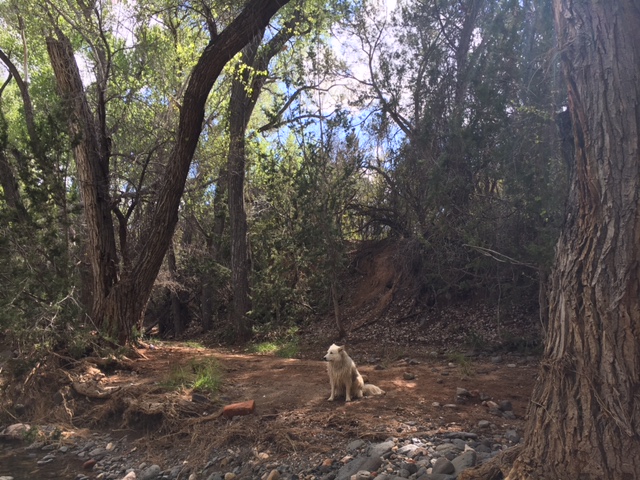
As I already mentioned, there are few large trees in the desert. It’s not like a coniferous forest. And most trees are deciduous. In fact, most of the desert landscapes around the world are quite tree-less. The Sonoran Desert (in Southern Arizona) is lush when compared to other deserts. Arizona contains all four North American deserts – the Sonoran, the Mohave, the Chihuahua, and the Great Basin—and it’s the only state where this occurs. But it’s the Sonoran Desert that allows for certain deciduous, hardwood trees to flourish. The Cottonwood tree is the largest tree in Arizona. So in a state dominated by all four North American deserts, the largest tree to be found is something special. Something unique. As Cottonwoods are a part of the poplar family—closely related to aspen trees—they require more water than a typical desert area might provide. These Cottonwoods must grow close to perennial, intermittent, or ephemeral waterways.

Every once in a while you might find one of these larger trees in the Rillito—a rare instance in which a Cottonwood or a Sycamore took root and shot straight up into the hot, blue sky. Here and now—there and then—I found the infamous Cottonwood tree, it’s large, green leaves whispering and fluttering, light bark beginning to grow thick and knobby around the trunk. To find a Cottonwood tree in the middle of an occasional river bed is truly rare, as most of the desert waterways have been invaded by the Tamarisk, which grows like a weed and monopolizes soil nutrients. Cottonwoods are in direct competition with the Tamarisk. This Cottonwood discovery gives one hope for a healthier desert watershed, as groups of these hardwood trees can be seen clustered together from a distance—a bright splash of green leaves and pale bark in a land of mostly blues and browns—and can always lead you to water in the desert. So the Cottonwood signifies a steady water source, which in turns symbolizes survival in the desert.

I was looking for my animals, but I was drawn to the Cottonwood, mesmerized by the absolute shadow it cast. The tree wasn’t big, maybe 15 feet tall, a young version of its future arboreal splendor. As I walked closer, I could see a lean-to beneath the tree—an empty shopping cart tipped on its side and several pieces of plywood propped against the tree. I immediately felt sorry for the tree, for a live tree is not suited to support human construction and utilitarian burden. Then I noticed the dark boots sticking out of the structure, attached to human legs. A man was laying inside. I stopped fast, scanning for the dogs, not wanting to wake or upset a stranger.

As I spun in circles, the wild pups appeared—over their rabbit hunt—and immediately discovered the motionless man. They were on his doorstep in seconds, sniffing and assessing. They seemed calm, so I strained myself to stay calm, too—a very human endeavor and foreign to most of the animal kingdom. They smelled his legs and torso, then entered the wooden tent and started licking his face—probably for the sweat and delicious oils there. I was nervous, but reacting would alarm the intuitive animals, so I stayed still and watched, ready to act or consider interceding if needed. It happened so fast, there wasn’t much left for me to do, anyway. I was a spectator watching human and animal interaction, praying for the best. Willing a benign encounter, or better.

The man stirred. He had a faded blue baseball cap pulled low, a long-sleeve flannel and torn blue jeans. I called in a hushed voice to Shooter and Rain—“Come here, now!”—but they chose this moment for selective hearing, as the new man in the sand was more interesting and aromatically potent than I was. The man’s eyes fluttered open. He slowly lifted his arm and let Shooter lick his hand. Then he began to scratch the large dog’s chest—Shooter’s favorite place to be pet, other than his hind quarters. Rain, afraid of a fluttering shadow—kept her distance, until she couldn’t stand it anymore. She moved in closer and the man scratched behind her ear—her favorite place to be pet, besides her belly. She remained leery, ready to run at the slightest threat, but she let him touch her which was a sort of desert miracle.

Pretty soon the man was petting the thick, but thinned-out summer coats of both wolfdogs. He sat up, adjusting his cap. I could see his face better. He had a dark beard, and dark brown eyes he kept lowered. He seemed to have an idea of what he was doing.

“Sorry,” I called so he would know I was there and the animals weren’t alone.  I took a few steps closer, but I didn’t want to throw off the balance of animal-human amorous interaction, or send them into guard-the-human-alpha mode.

“I thought the coyotes were finally going to finish me off,” he said. He spoke gently, with a noticeable slur. He probably wasn’t sober, but who knows. I couldn’t make out his ethnicity, as the sun had made him a creature of the desert and he was a brownish-red color. He squinted up at me, then the canines. “These here are really big coyotes. Do you run with them?”

I was holding my breath, I realized, so I let it out and smiled. “Yes, they’re my dogs and we run together.”

The man smirked. “These ain’t dogs.”

I laughed nervously. A tinkling sound like rocks falling in a cave.

“Close enough,” I said. “Ninety-nine point eight percent genetically close enough.”

The man ignored my data touting, staying focused on the animals. “I used to have a dog,” he said. “When I used to have a house.”

I didn’t know what to say to that, so I said nothing. But I knew. My roommate in graduate school digressed from genius to homeless in a matter of days, and there was nothing anyone could do. I know it’s rarely a choice. And it’s usually mental illness. She was schizophrenic and I didn’t even know. Until she stopped taking her meds. That’s when she unraveled and in a matter of weeks, was running barefoot around the university and downtown with the rest of the local, ephemeral population. The descent from normalcy was quick, and if she hadn’t had a family that loved her and friends that cared, she would probably still be there, if not dead. I often think of Rachel when I meet homeless people. I think of her when I start to judge someone—how brilliant the human mind can be, how fragile and fleeting our entire existence. Seeing the world through the eyes of a schizophrenic—danger and death around each jagged, hallucinated corner—made me realize that most homeless people used to have a home. And they probably even used to have a dog. The mentally ill seemed to run in the gap between civilized humanity and the untamed world of wild animals. Like the world of the wolfdog and wild urban landscapes. Like the Rillito River arroyo.

It seemed like I watched for hours as the man pet Shooter and Rain. He stroked them and cooed to them like I wasn’t even there. And incredibly, they stood still and let him. The man was lost in his thoughts, more so with each passing moment. Then, like a gathering desert monsoon, his earth-laden body flooded with emotion and he began to cry. His shoulders shook and tears streamed down his face. Now my Shooter dog is the most sensitive, unruly guardian soul I’ve ever encountered, and human emotion undoes him—the same as thunder. It troubles him to the marrow of his bones. So Shooter whined, in response to the man’s tears, and licked his face with intensity—an act I’d experienced many times myself. Shooter licked his face with so much concern, the man started to laugh, as the wolfdog’s earnestness and empathy forced a crack in the stone wall of human emotion. A life preserver in a sea of black.

Soon the sunbaked man was roiling with laughter, as Shooter’s antics knocked his hat off, and Rain rolled on her back next to him, offering her belly, catching the playful mood and the need for comic relief. This was the first time I’d seen her vulnerable to anyone but me.  The man buried his dark hands in the tangle of Rain’s snow white fur. She wagged her tail and rolled around on her back, smiling upside down with crocodile-like, toothy wit. I’d never seen her do this, but she was enjoying the attention. The man was laugh-crying, so he wiped the moisture from his face, and took deep breaths. As he put his hat back on I could see that it was a faded University of Arizona hat—the red and white “A” now a dark brown. I wondered if he’d been to school, and what sort of events had landed him here, in the bottom of the Rillito River, in the shade of the Cottonwood tree.

With the break in human emotion, Shooter was restless and ready to move on. He was a practical counselor, and not one to dwell in the past. Rain was ready, too. She jumped up and threw herself into Shooter like a tiny wolf wrecking ball, and they were off and running again, kicking up sand in the man’s bed cloths and spinning into the desert wonderland.

The man put his clay hands up in mock protest. He spit sand from his mouth, grinning and shaking his head.

“Sorry about that,” I apologized, feeling self-conscious without the animals.

He slowly wiped sand from his shirt and pants. Then he stared at his palms, face up in his lap for several moments, as if they reminded him of the dogs. He rubbed them together, then, and laced his fingers behind his head. The man was still smiling as he lay back down into the sand. I watched him, wondering if he would respond to me without the animals around.

“Thank you,” he whispered from inside the wooden tent.

I considered thanking him for being so calm. For his willingness to interact with the unknown. For playing a symbiotic role in the rehabbing of Rain. But I didn’t.

“You’re welcome,” was all I said.

I followed in the wake of my ambassadors.  As we ran in the raised center of the wash, away from the only Cottonwood tree in the Rillito River for miles, I could already see the cumulus clouds building over the Catalina Mountains. The relative humidity was on the rise and the air temperature would rise with it. Until it began to rain. I watched the fluffy tails of my wolfdogs disappear into tamarisk and willow scrub ahead of me and I couldn’t help but wonder if our new sand man friend would find his way out of the arroyo before the big floods came. I couldn’t help thinking that if he didn’t, at least he would sink beneath the water with a smile on his face.